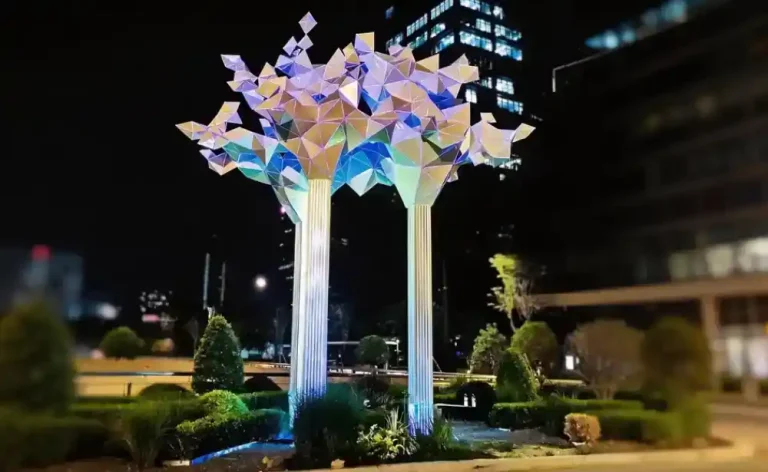
Large outdoor coastal sculptures require strict material selection. A 30-meter kneeling female sculpture built for seaside exposure faces harsh challenges including salt spray corrosion, strong coastal winds, high humidity, and long-term ultraviolet radiation. The chosen material directly determines the artwork’s durability, aesthetic presentation, maintenance cost, and overall project budget.
For oversized marine landscape sculptures, four materials are widely adopted in custom engineering projects: stainless steel, H62 brass, tin bronze, and silicon bronze. This article delivers a practical material comparison tailored for 33m seaside figurine sculptures, covering marine adaptability, texture performance, service life, and project cost to help you make a cost-effective and long-lasting decision.
Core Requirements for 33m Coastal Kneeling Sculpture Materials
Unlike indoor or urban inland sculptures, seaside monumental artworks prioritize three core indicators. First is salt corrosion resistance, as coastal chloride ions erode most metal materials rapidly and cause surface rust, oxidation, or material aging. Second is structural stability. A 33-meter ultra-large vertical sculpture demands high tensile strength and wind resistance to avoid deformation under long-term coastal wind pressure. Third is aesthetic sustainability. The kneeling female sculpture features smooth body lines and delicate facial and clothing details, requiring materials that retain texture without frequent discoloration.
Each of the four mainstream materials has obvious pros and cons in meeting these standards, with huge differences in long-term marine service performance.
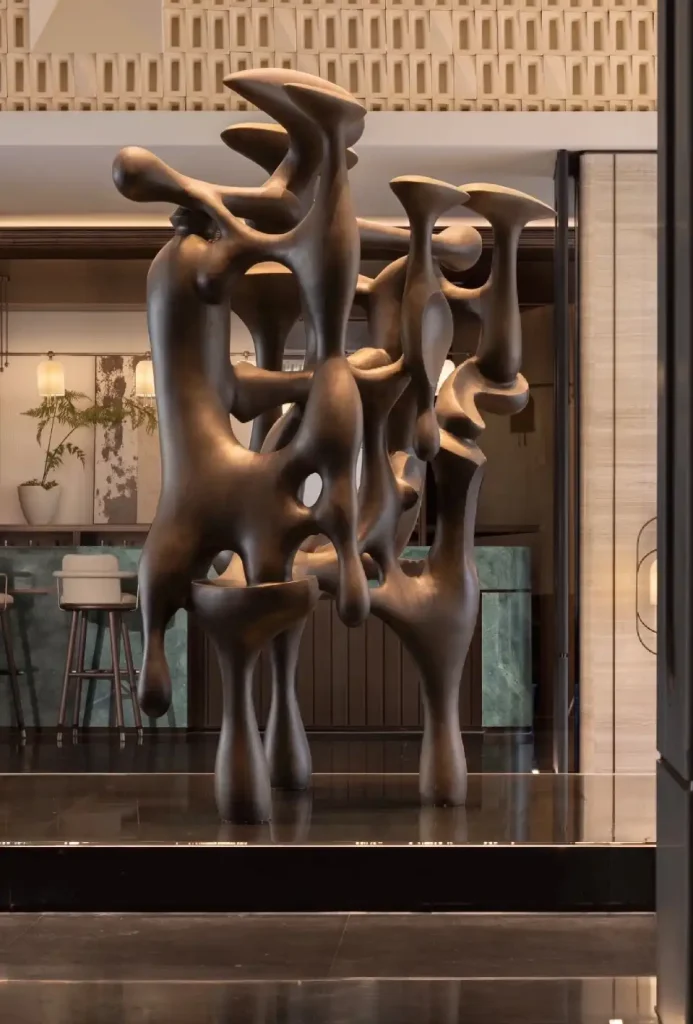
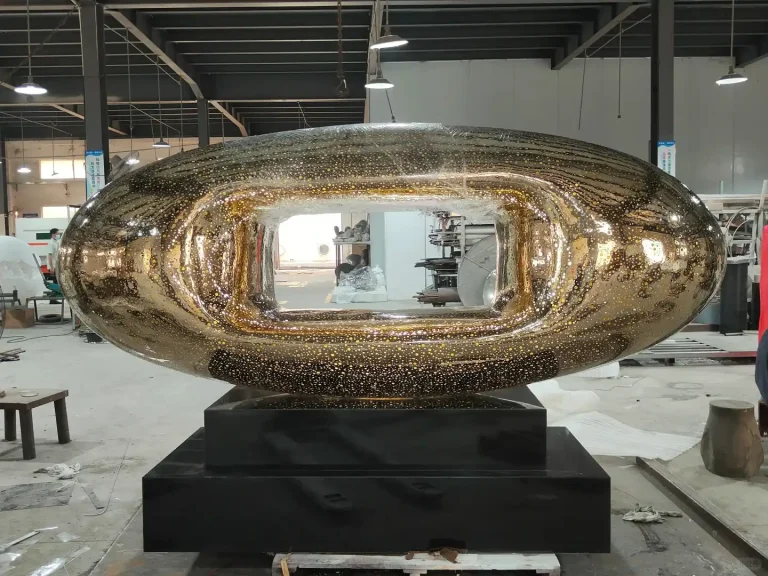
The core quality of silicon bronze sculptures lies in the perfection of their surface treatment methods, such as heat coloring, spray painting, and nano-spray plating, followed by the casting and refinement of surface details, especially textures, to avoid pinholes and color spots. The design of the internal support structure is also crucial, requiring consideration of both durability and firmness, as well as the treatment of contact points with the sculpture’s outer skin.
Mr. Jiang Long Xing, the engineer of WEMEDEC Space.
Practical Comparison of Four Sculpture Materials for Seaside Use
1.Stainless Steel
Stainless steel is the most cost-effective choice for large coastal sculpture projects. Its biggest advantage is excellent salt spray resistance and oxidation resistance, with stable physical properties in high-humidity marine environments. It rarely rusts and requires minimal daily maintenance.
In this case, 316L or 316 stainless steel material is much more suitable than 304 stainless steel for the better corrosion resistance.
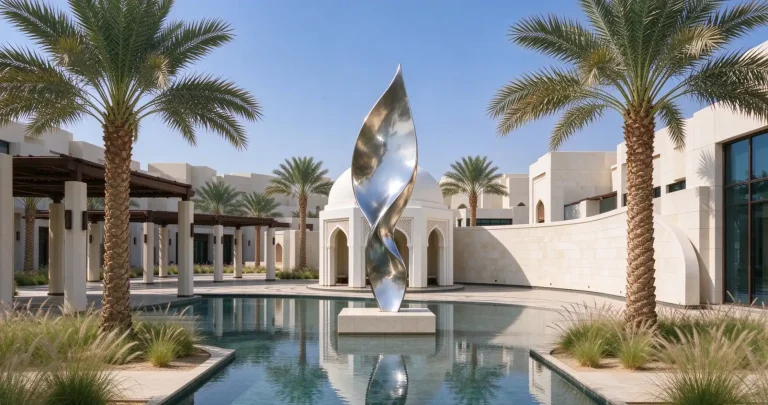
In terms of structural performance, stainless steel boasts high hardness and strong wind resistance, perfectly fitting the structural load requirements of 33-meter oversized sculptures. It supports integral welding and frame reinforcement, ensuring long-term structural safety. Aesthetically, polished stainless steel presents a modern metallic luster, while brushed treatment delivers a low-texture matte effect.
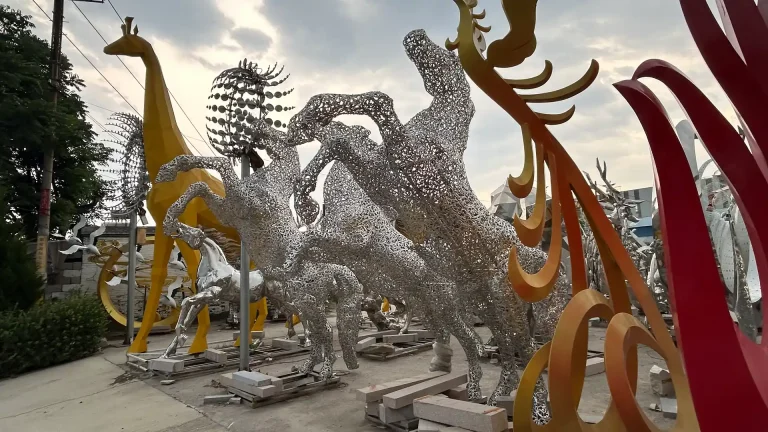
The main limitation lies in detail expression. Stainless steel has poor ductility compared with copper alloys, making it difficult to carve ultra-fine facial lines and soft clothing folds for kneeling female figures. It is more suitable for minimalist styles rather than realistic and delicate artworks. In terms of cost, stainless steel has the lowest overall quotation among the four materials, with low raw material and processing costs, ideal for projects with limited budgets and priority for durability.
2. H62 Brass
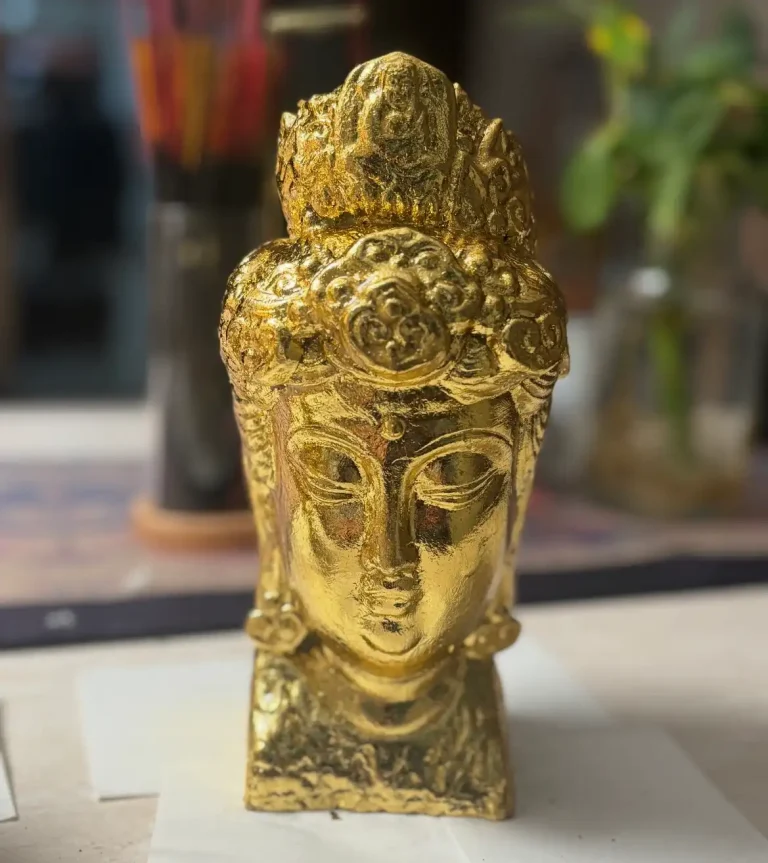
H62 brass is a common decorative copper alloy with bright golden-yellow color and superb processing ductility. It can restore delicate details of female sculptures such as soft body curves, hair textures and layered clothing folds, achieving superior artistic expression.
However, H62 brass has obvious defects in marine environments. Its salt corrosion resistance is weak. Long-term exposure to sea breeze and salt spray easily causes surface oxidation, darkening, and uneven patina. Regular professional polishing and anti-corrosion coating maintenance are required, leading to high later-stage maintenance costs.
Structurally, H62 brass has moderate strength, sufficient for 33m sculptures with professional internal steel frame reinforcement. Its overall project cost is higher than stainless steel and lower than tin and silicon bronze, suitable for projects that pursue bronze texture but have moderate budget.
3.Tin Bronze
Tin bronze is a classic traditional sculpture material, widely used in high-end outdoor bronze carvings. It features uniform texture, strong wear resistance and stable color oxidation. After long-term seaside exposure, it will form a natural antique patina with high artistic appreciation value, perfectly matching the solemn and gentle temperament of kneeling female monumental sculptures.
In marine adaptability, tin bronze outperforms ordinary brass with greatly improved salt spray corrosion resistance, adapting to long-term coastal outdoor use without frequent aging damage. Its downside lies in cost. Tin raw materials are expensive, and precision casting of large 33m sculptures requires complex craftsmanship and long production cycles, resulting in the highest total project cost among the four materials. It is mainly used for high-end landmark coastal art projects that prioritize art grade and permanent preservation.
4. Silicon Bronze
Silicon bronze is the optimal upgraded material for marine large copper sculptures, balancing corrosion resistance, structural performance and artistic effect. It adds silicon elements on the basis of copper alloy, greatly enhancing salt spray and marine atmospheric corrosion resistance, far exceeding brass and comparable to professional marine alloys.
It retains the excellent casting performance of copper materials, capable of restoring all delicate details of kneeling female sculptures. Its structural toughness and tensile strength are better than ordinary brass and tin bronze, effectively resisting coastal strong winds and avoiding deformation of oversized sculptures. The color is stable and uniform, with slow natural oxidation speed and consistent surface texture.
In terms of cost, silicon bronze is slightly cheaper than tin bronze and more expensive than H62 brass. It is the most cost-effective choice for medium and high-end 33m seaside copper sculpture projects, suitable for landmark artworks requiring decades of maintenance-free use – Said engineers from WEMEDEC sculpture company.
Final Material Selection & Budget Reference for 33m Seaside Kneeling Female Sculpture
For budget-friendly and durable projects with modern minimalist style, stainless steel is the best choice, featuring low overall cost, zero daily maintenance and stable structure.
For projects focusing on delicate artistic details with general budget, H62 brass is optional, but regular anti-corrosion maintenance must be reserved in the later stage.
For high-end landmark projects pursuing antique bronze texture and permanent preservation, tin bronze delivers the top-grade artistic effect.
For most coastal monumental sculpture projects that balance quality, aesthetics and cost, silicon bronze is the most recommended solution, with superior marine adaptability, exquisite detail restoration and controllable comprehensive cost.
In general, oversized seaside sculptures prioritize corrosion resistance and structural safety. Copper alloys represented by silicon bronze and tin bronze are still the mainstream choice for high-value coastal landscape artworks, while stainless steel dominates low-budget durable engineering projects.