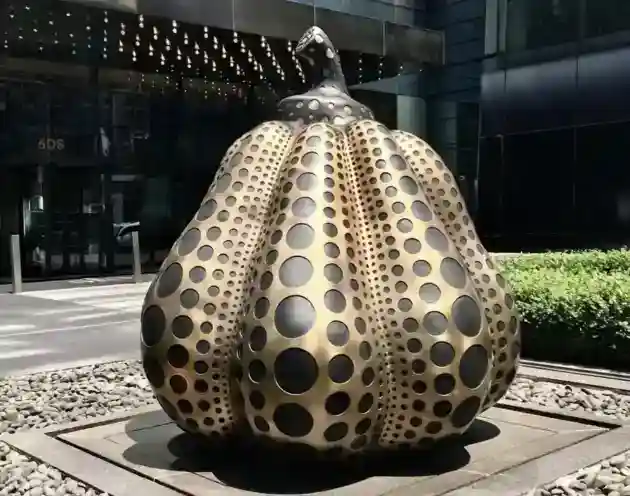
Yayoi Kusama’s polka-dot pumpkin sculptures are among the most beloved and instantly recognizable visual symbols in contemporary art history. The Japanese artist, often hailed as the ‘Princess of Polka Dots’, uses endless dots and vibrant colors to transform the humble pumpkin—an otherwise ordinary vegetable—into a philosophical vessel carrying themes of life, the universe, and the dissolution of the self.
The Inspiration Behind the Pumpkin Motif
Kusama’s connection with pumpkins dates back to her childhood. Born into a family that ran a plant nursery in Matsumoto, Nagano, Japan, she first visited a large seed-harvesting farm with her grandfather during elementary school. There, she saw a pumpkin the size of a human head. In that moment, she felt as if the pumpkin ‘immediately began to speak to me in the most animated way.’ This experience, bordering on hallucination, has permeated her entire artistic career.
In the aftermath of World War II, Japan faced severe material shortages, making the pumpkin a vital food source for survival. It was during this period that her impression of the pumpkin deepened. It gave her a powerful sense of vitality and came to symbolize peace, joy, and sunlight.
Why the Polka Dot Element
Since her childhood, Kusama has suffered from hallucinations where the world she sees is often covered in nets and dots, as if everything is about to be engulfed. Kusama explains that the polka dot has the form of the sun, symbolizing the world and life force. Simultaneously, it has the form of the moon, emitting a quiet, calming aura. Round, soft, colorful, senseless, and intangible, the polka dot becomes a form of movement—a way to infinity. By combining the pumpkin with polka dots, she created a profoundly influential body of work through her unique artistic language.
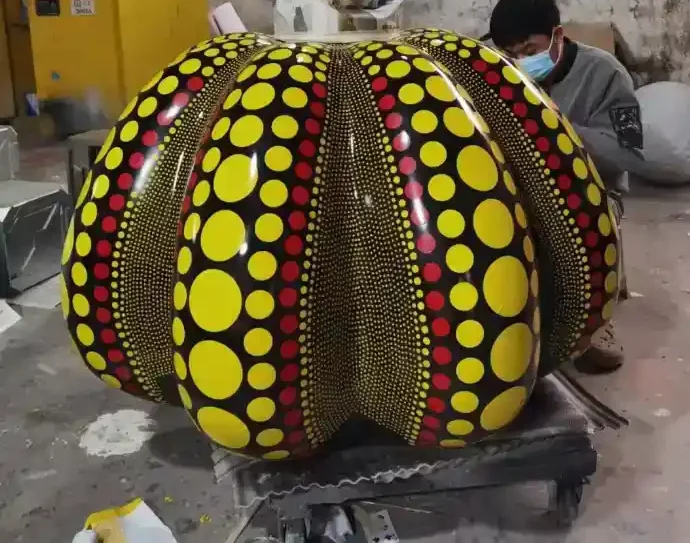 Polka Dot Pumpkin Sculpture Factory
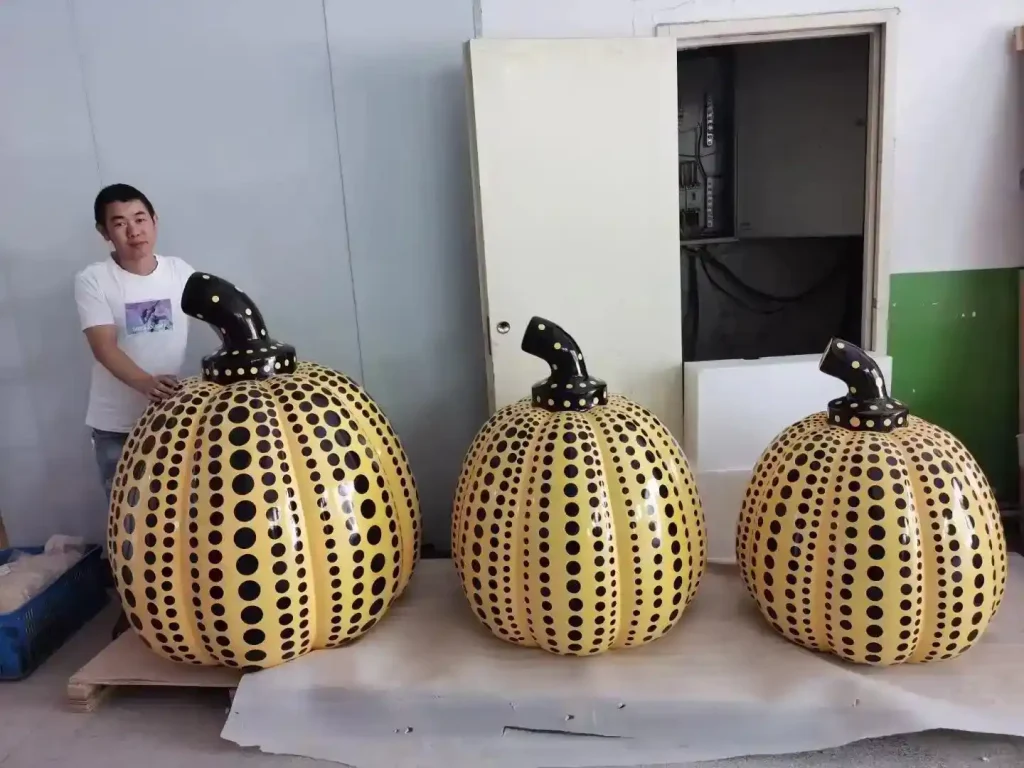 Polka Dot Pumpkin Sculpture Factory
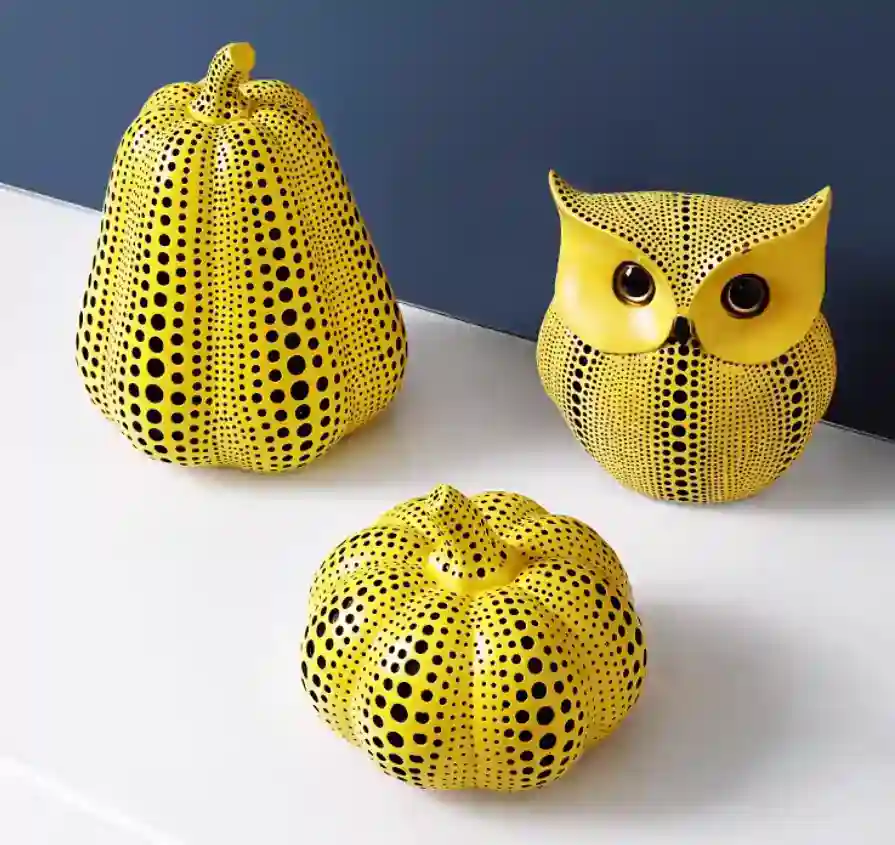 Polka Dot Pumpkin Sculpture Factory
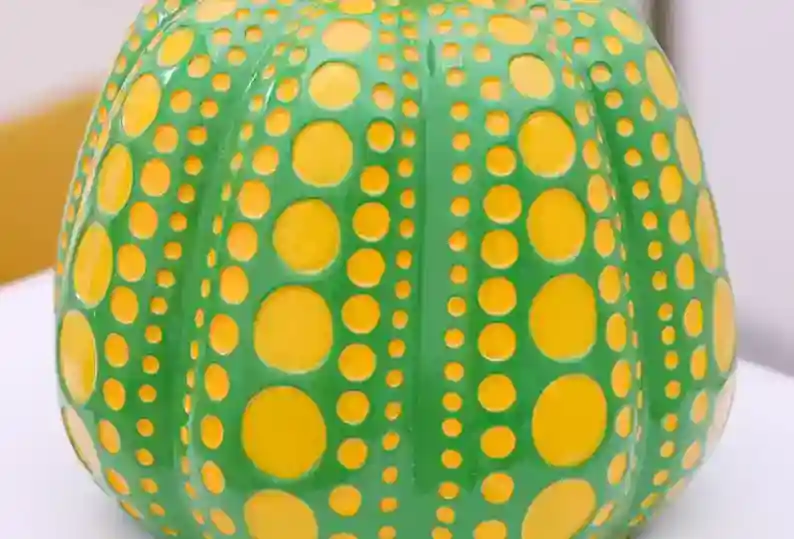 Polka Dot Pumpkin Sculpture Factory
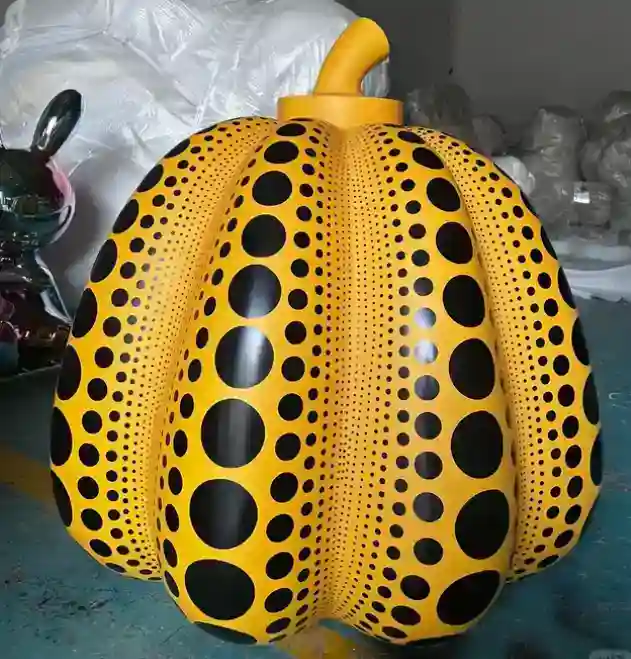 Polka Dot Pumpkin Sculpture Factory
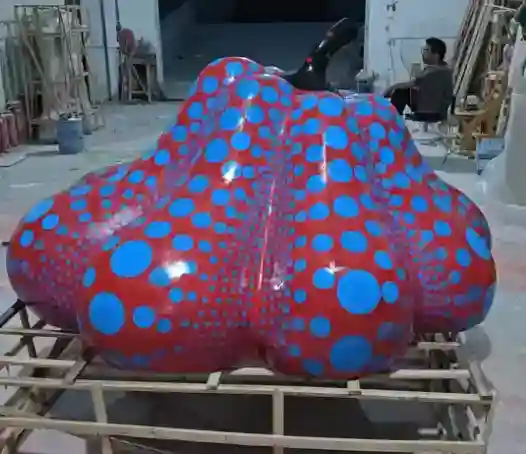 Polka Dot Pumpkin Sculpture Factory
Diverse Forms: The Evolution of the Pumpkin Sculptures
Kusama’s pumpkin sculptures are not static. They have evolved over time, adopting diverse forms and materials. Early bronze pumpkins from the late 1980s, such as Pumpkin No. 1 and Pumpkin No. 2, exhibit a rustic yet substantial texture. With delicate brushstrokes applied over the raw metal, the vertical ridges coalesce with a skeletal strength, revealing the resilience and sedimentation of life. The work that truly brought her pumpkin sculptures worldwide fame was Mirror Room (Pumpkin) at the 1993 Venice Biennale. In this landmark installation, Kusama placed a small pumpkin sculpture inside a room lined with mirrors. Through infinite reflections, the tiny pumpkin was ‘expanded into infinity’. From that point on, the concept of infinity became inextricably linked to her pumpkins.
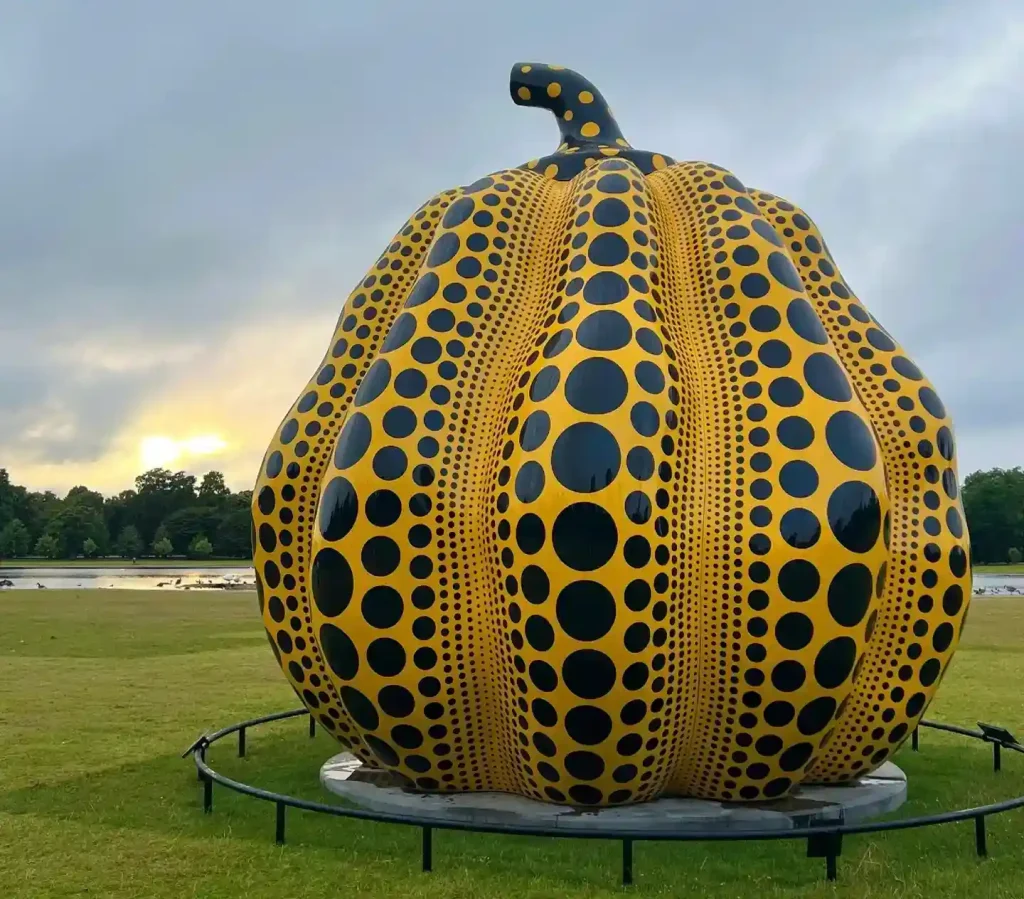
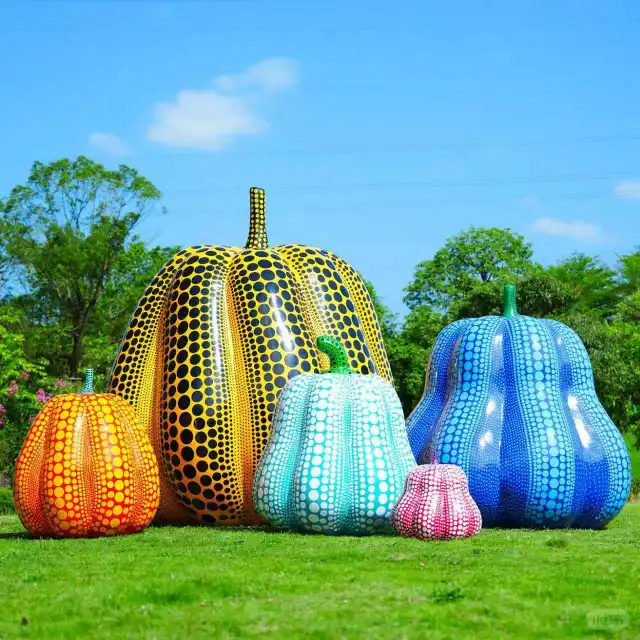
Subsequently, the materials used for her pumpkin sculptures became more varied. Around 2010, she created numerous sculptures using fiberglass-reinforced plastic (FRP), such as the classic yellow pumpkins with black polka dots. These pieces could reach over two meters in height, featuring smooth surfaces and brilliant colors. During the same period, her My Soul Blooms Forever series utilized highly polished aluminum. These works have irregularly cut circular openings on the surface, revealing brightly colored interiors. The combination of mirror-like reflection and open polka dots allows light to penetrate the work, creating the illusion that the pumpkin is truly “flying off into unknown, infinite space.” In 2024, a colossal yellow pumpkin sculpture by Kusama, standing ten meters tall, was unveiled in Shanghai’s North Bund area. It stands as one of the largest pumpkin works in her career. This immense scale delivers not only a visual impact but also a reassuring sense of peace.
As one of the largest sculpture manufacturers and suppliers in China, WEMEDEC is specialized in co-creating and improving space with outstanding artistic design and fabrications. We are capable of manufacturing such polka-dot pumpkin sculptures (as long as authorized with copyrights). If you have a demend of sculptures, we are waiting to assist.