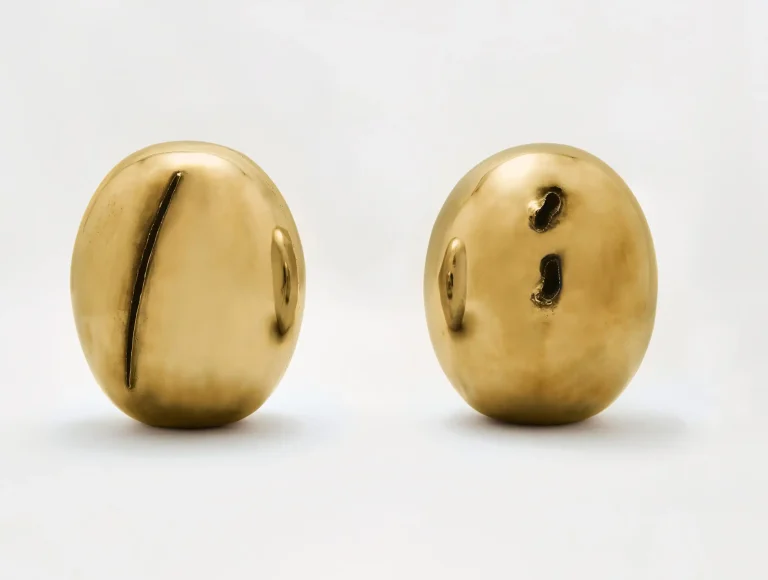
Bronze sculpture is a common sculptural material, particularly well-suited for complex and harsh environments, such as seasides, areas with strong winds and sand, and so on. Bronze sculptures have excellent corrosion resistance and strong formability, making them a very good category of sculpture. Today, we have compiled some common knowledge points about bronze sculptures.
Q1: What is bronze sculpture?
WEMEDEC: Bronze sculpture refers to three-dimensional artworks created using copper as the primary raw material, through techniques such as casting, forging, and welding. Based on the production process, it is mainly divided into cast bronze sculpture (using techniques like lost-wax casting) and forged bronze sculpture (shaped by hammering and forging). Bronze sculptures are characterized by corrosion resistance, long-lasting preservation, and strong artistic expression. They are important art forms in fields such as public art, religious statuary, and home decoration.
Q2: What Are Commonly Used Materials in Bronze Sculptures?
WEMEDEC: In bronze sculpture, the choice of material directly affects the artwork’s final appearance, structural integrity, and longevity. Below are the most commonly used copper-based materials, explained in detail.
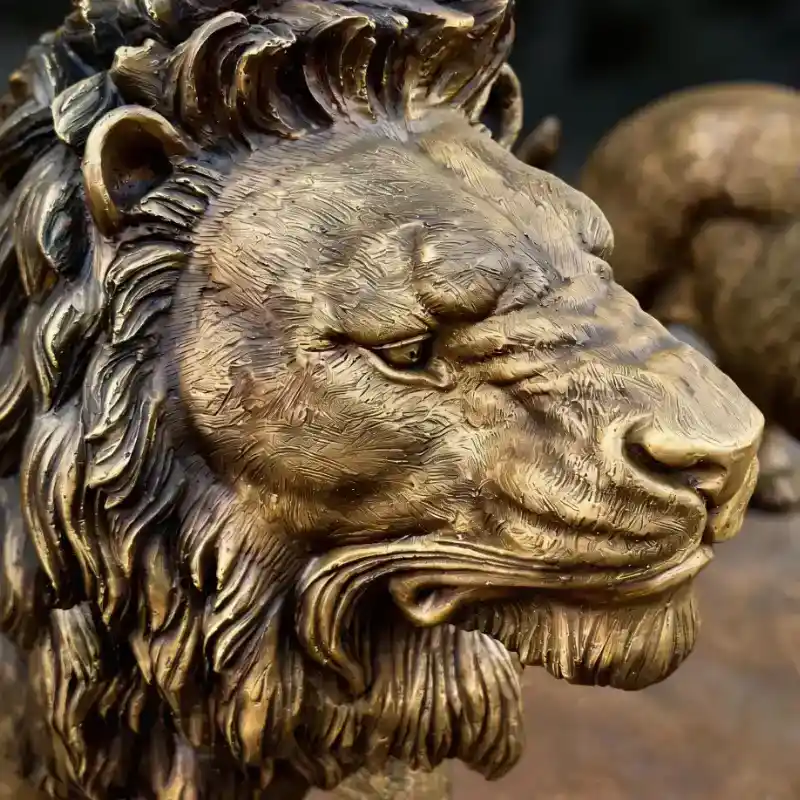 Bronze Lion Sculpture
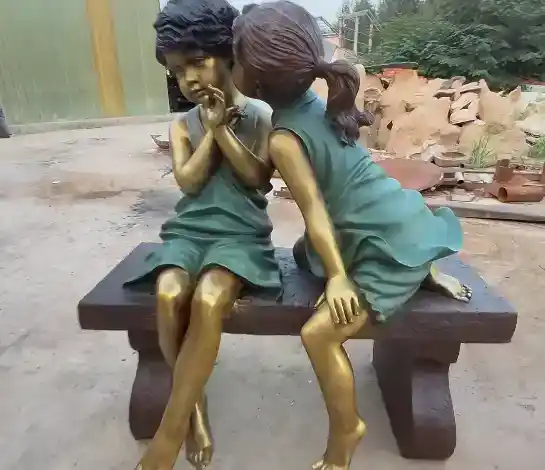 Bronze Sculpture – Little Girls
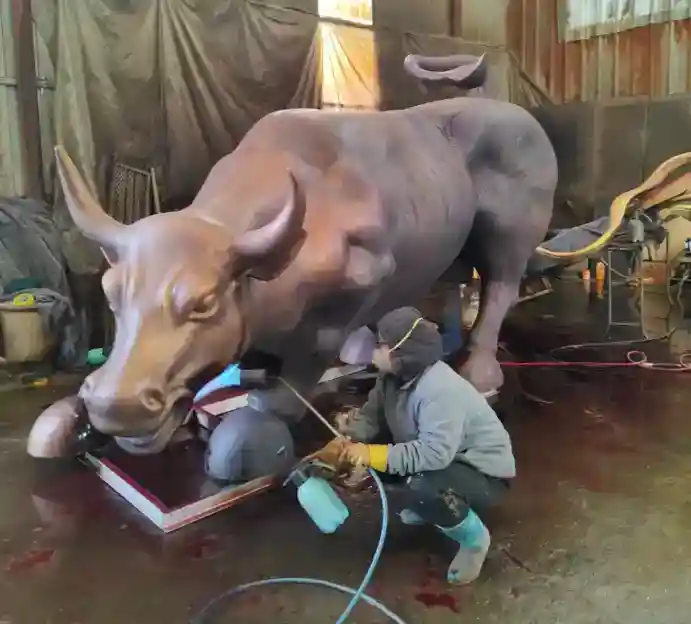 Bronze Bull Sculpture
(1) Red Copper (Pure Copper)
| Attribute | Description |
|---|---|
| Also Known As | Pure Copper |
| Composition | Copper element (Cu), with copper content typically above 99.5% |
| Characteristics | • Soft texture with excellent ductility and plasticity, ideal for processing fine details • Good electrical and thermal conductivity • Rose-red color when fresh, turning purplish-brown upon oxidation • Strong corrosion resistance |
| Common Applications | Ideal for small sculptures requiring intricate details, such as facial features and hands in figurative works; also commonly used in red copper reliefs |
(2). Brass
| Attribute | Description |
|---|---|
| Also Known As | Bronze |
| Composition | Alloy of copper and zinc (Cu-Zn) |
| Characteristics | • Higher strength, hardness, and wear resistance compared to red copper. • Golden-yellow color with excellent metallic luster and decorative appeal. • Good corrosion resistance, though requires proper preservation techniques. |
| Common Applications | Widely used in decorative sculptures, architectural ornamentation (carved bronze doors and windows), small craft pieces, and medium-to-large sculptures requiring structural strength |
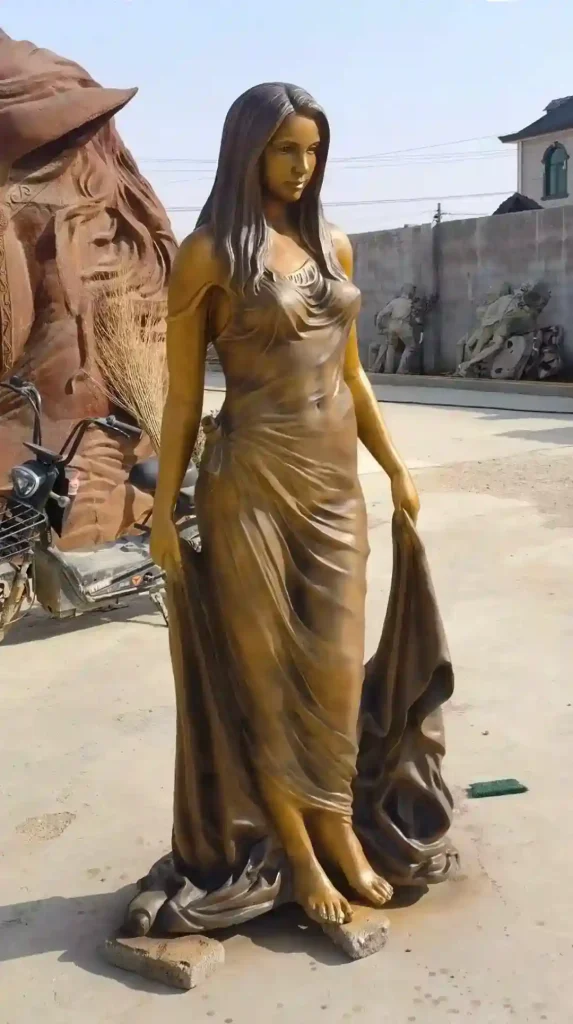
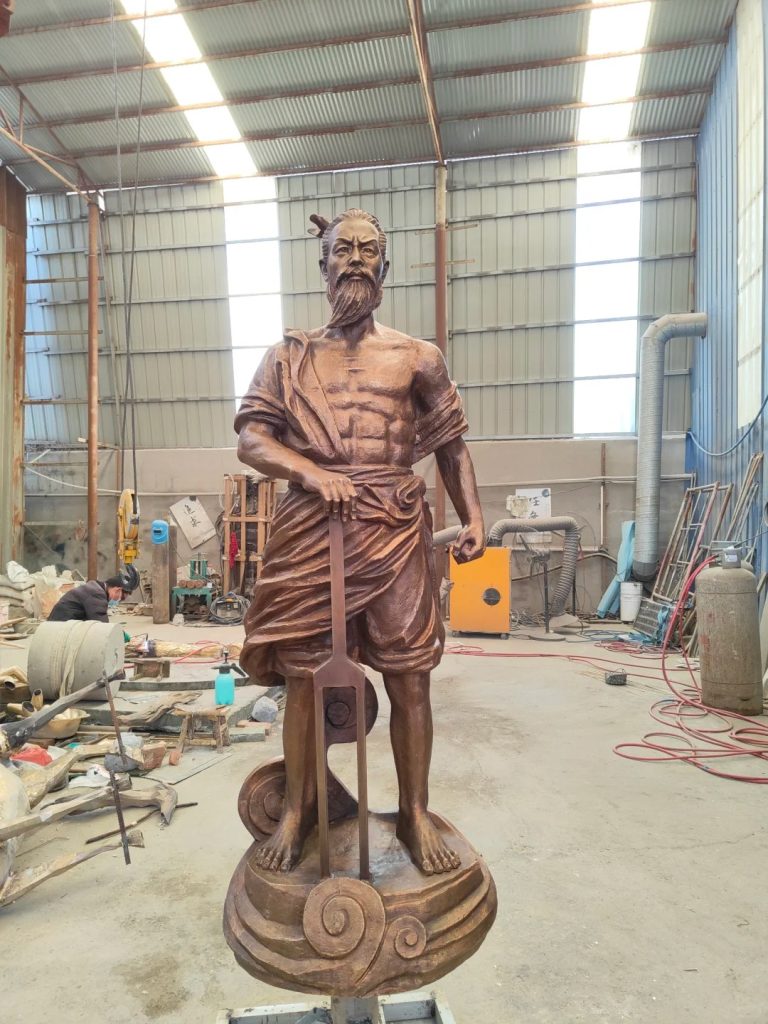
(3). Bronze
| Attribute | Description |
|---|---|
| Also Known As | Bronze |
| Composition | Alloy of copper and tin (Cu-Sn), or other copper-based alloys excluding Cu-Zn and Cu-Ni. |
| Characteristics | • High strength, hardness, and excellent wear resistance • Lower melting point with good fluidity, ideal for casting complex and detailed forms. • Chemically stable, easy to preserve, with a dignified appearance. |
| Common Applications | A vital sculptural material throughout history, commonly used for antique-style bronze reproductions (e.g., ancient ding vessels and zun vessels), figurative sculptures, and large-scale installations in urban spaces, temples, and parks. |
(4). Silicon Bronze
| Attribute | Description |
|---|---|
| Also Known As | Silicone Bronze Material |
| Composition | Copper-based alloy with silicon (Si) as the primary alloying element (a type of special bronze/high-copper alloy). |
| Characteristics | • Excellent casting properties: Superior fluidity for replicating fine details, ideal for complex shapes and thin supports. • Exceptional corrosion resistance: Performs well in outdoor environments, resistant to air, rain, and chemical pollutants. • Good mechanical properties: High strength and wear resistance. • Superior weldability: Better than traditional tin bronze, crucial for large sculptures requiring sectional casting and on-site assembly. • Aesthetic versatility: Achieves various patinas (light brown, gray-green, deep blue) through chemical treatments. • Cost advantage: More economical than tin bronze while maintaining performance. |
| Common Applications | Preferred material for large, complex, high-quality outdoor urban sculptures and monuments. |
Q3: tell me something about The Casting Process of Bronze Sculpture
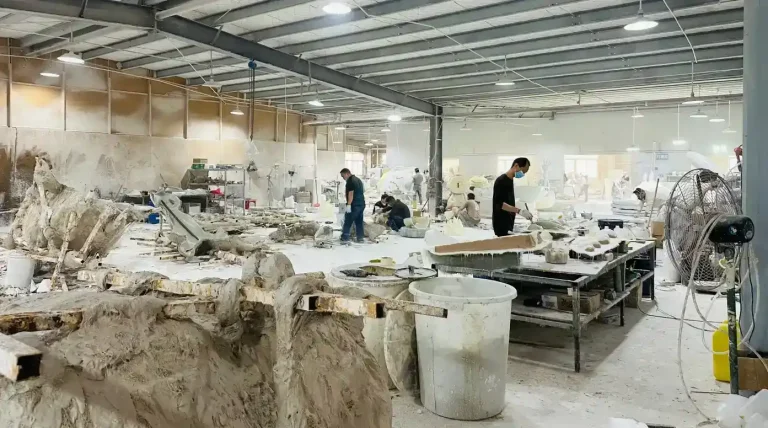
WEMEDEC: The casting process for bronze sculpture is a highly complex and meticulous procedure, with the most mainstream method currently being the lost-wax casting process. The entire process begins with the sculptor’s creation, starting with the production of a complete three-dimensional clay prototype. For large sculptures, an internal metal armature must first be constructed. Once the clay model is completed, silicone or plaster is applied to it to create an outer mold. After the mold has cured, it is removed, resulting in a negative mold that is the inverse shape of the clay sculpture. The next stage is wax pattern production, where molten wax is injected into the silicone mold and rotated evenly, allowing the wax to adhere to the inner surface of the mold and form a wax layer of the required thickness. After cooling, the wax pattern is removed. At this point, artisans use heated scrapers to meticulously clean the mold lines on the wax pattern’s surface and manually refine the details. For batch production of small items, multiple wax patterns are often welded onto a common wax sprue to form a wax tree, ensuring that molten metal can flow evenly into each cavity simultaneously. Subsequently, the shell building stage begins. The wax pattern is repeatedly dipped into a specialized refractory slurry and then coated with refractory sand. This process is repeated five to eight times, layering from fine sand to coarse sand, until a hard shell of sufficient thickness is formed. Each layer requires thorough drying in a temperature and humidity-controlled environment. After drying is complete, the shell is placed in a high-temperature steam dewaxing autoclave and heated, causing the internal wax pattern to melt and flow out through the sprue. At this point, a smooth cavity identical to the original prototype is formed inside the shell.
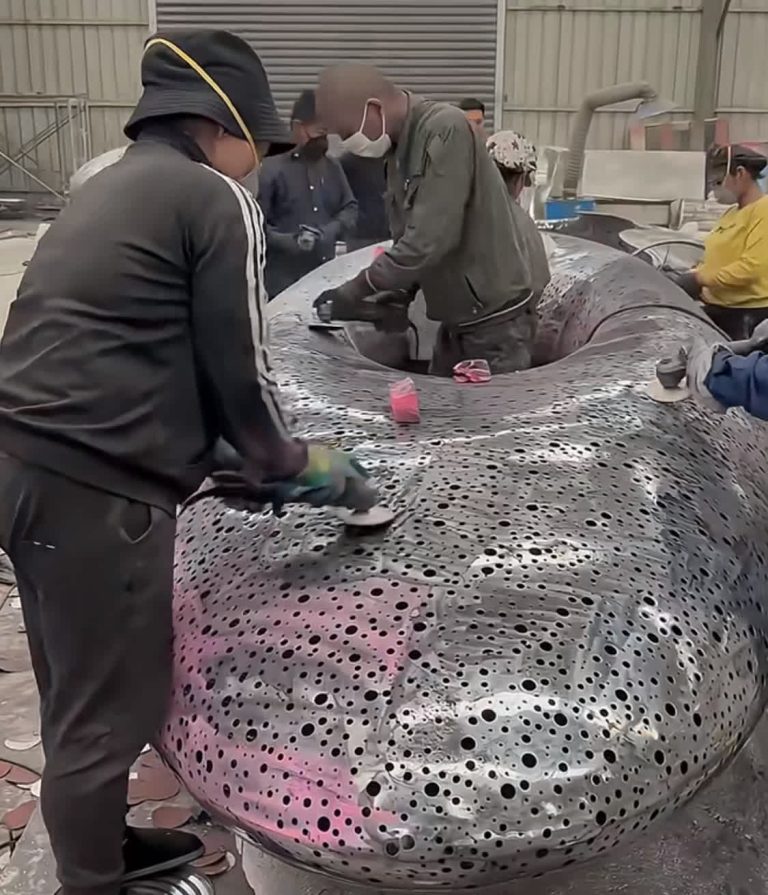
Next, the dewaxed shell is placed into a high-temperature kiln and fired to 800 to 1100 degrees Celsius. The purpose is to remove residual moisture and wax residue, while also preheating the shell to ensure that the subsequent molten bronze does not cool prematurely and solidify poorly upon pouring. Simultaneously with the firing, copper material is placed into a furnace and heated to 1100 to 1300 degrees Celsius until it completely melts into a liquid state. The molten bronze is then quickly and smoothly poured into the shell cavity. After the molten bronze has completely cooled and solidified, the outer refractory shell is broken away using vibration equipment or a high-pressure water jet, revealing the inner bronze casting. At this stage, the auxiliary parts such as the sprue and vents need to be cut off from the casting. Once the rough casting is obtained, tools such as angle grinders and belt sanders are used to grind and polish the casting’s surface, removing residual sand particles and oxidation layers. Details such as eyes and drapery lines are meticulously refined, and any minor porosity or defects that may have appeared during casting are repaired. For large sculptures, which are cast in sections, tungsten inert gas welding is used to assemble and weld the various parts into a whole, with the welds ground down until they are imperceptible to the naked eye. After welding, the surface coloring stage begins. Utilizing the chemical properties of copper, heat and acidic chemical agents are applied to produce the desired color on the copper surface, such as antique bronze, bronze, gold, reddish-brown, or green patinas. Finally, the completed sculpture is heated and coated with protective wax, which is repeatedly buffed with a soft cloth to seal the pores, prevent oxidation, and enhance the luster. After a final inspection of the overall form, small sculptures are mounted on bases and packaged, while large sculptures are transported to the site for foundation pouring and installation by crane. The entire process, from clay modeling to final completion, typically requires twenty to fifty days and embodies the dedication and wisdom of the sculptors and craftsmen involved.
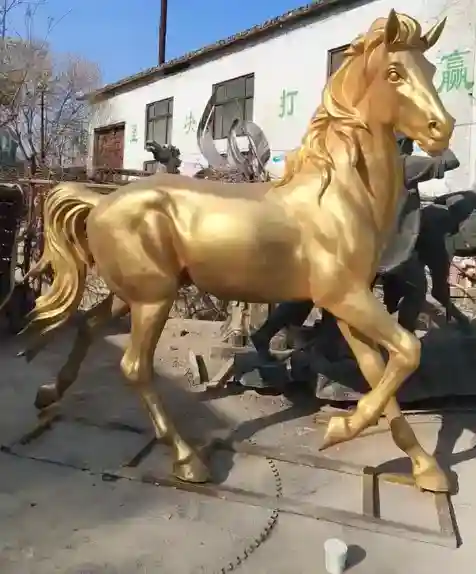 Bronze Horse Sculpture
 Bronze Sculpture – Peace
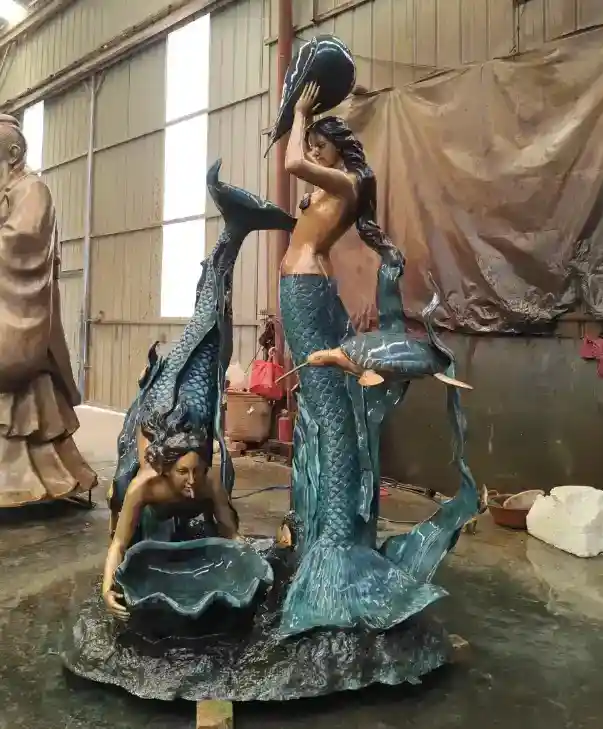 Bronze Mermaid Sculpture
Q4: What are the commonly seen wall thicknesses of bronze sculptures?
WEMEDEC: The wall thickness of a bronze sculpture is not a fixed value; it mainly depends on the sculpture’s size, craftsmanship, and design requirements. Generally speaking, for cast bronze sculptures produced using the lost-wax method or sand casting process, the standard wall thickness is typically between 4 and 8 millimeters. For small or standard-sized cast bronze sculptures, the wall thickness is usually around 4 to 5 millimeters. For some high-demand projects or sculptures with specific shapes, the wall thickness is required to be between 5 and 8 millimeters. For large sculptures or specific parts that require higher strength and load-bearing capacity, the wall thickness can also be made to exceed 20 millimeters. Additionally, there is another common technique called forged bronze sculpture, which is crafted by directly hammering copper sheets, and its wall thickness is generally thinner, typically ranging from 1.5 to 3 millimeters.
Q5: What are the surface treatment methods for bronze sculptures?
WEMEDEC: The surface treatment methods for bronze sculptures are very diverse and can be mainly categorized into chemical coloring, protective coating, and metal decoration.
Chemical coloring is the most commonly used process, which involves forming a colorful oxide film or compound layer on the copper surface through chemical or heat treatment methods. This includes hot coloring, where heat is applied along with acidic chemical agents such as ferric nitrate and potassium sulfide to produce rich colors like antique bronze, bronze, gold, reddish-brown, green, and pink gold. It also includes the patina formed by natural oxidation, which is the gentle green rust layer produced on outdoor bronze sculptures through prolonged natural reactions. Additionally, there is cold coloring, such as using selenic acid solutions to treat local scratches or patterns.
To protect the sculpture and maintain or enhance its appearance, protective coating methods are typically adopted. Wax sealing is a common technique, where a layer of wax is applied to the surface and polished to seal pores, prevent oxidation, and increase luster. Spray painting or applying transparent lacquer is also very common, such as spraying transparent fluorocarbon matte varnish or special resin paint containing asphalt, which leverages their excellent weather resistance and adhesion to provide long-lasting protection. Another traditional method of protection and beautification is applying raw lacquer, which involves brushing on a mixture of Chinese lacquer and boiled tung oil. After drying, it forms a hard, transparent, and strongly adhesive protective film.
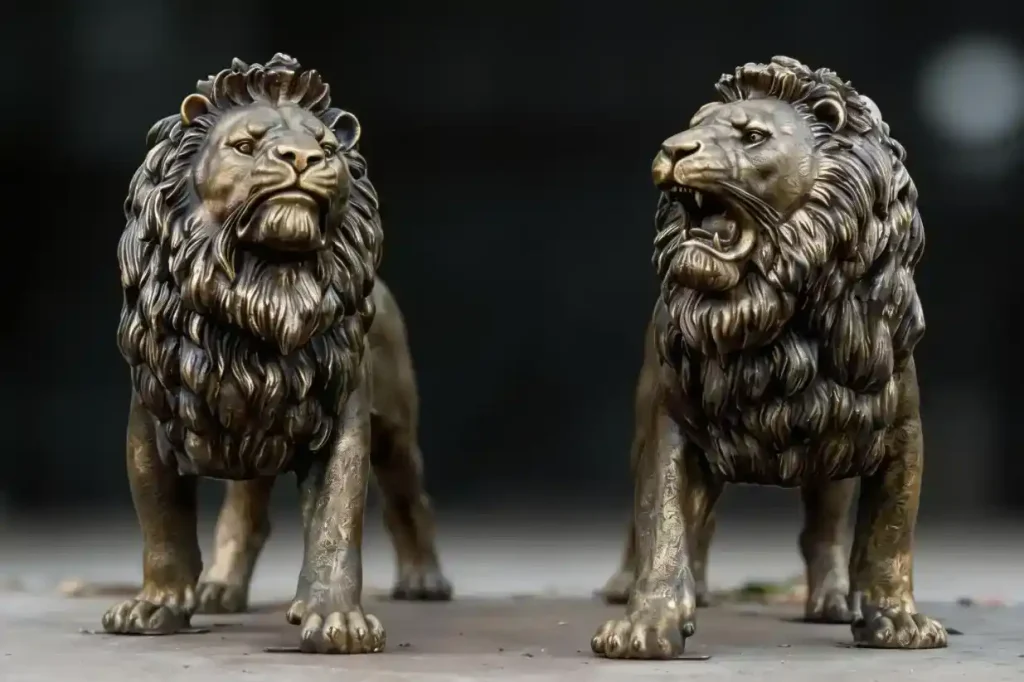 Bronze Lion Sculptures
To achieve magnificent or exquisite and elegant decorative effects, there are also some special metal decoration techniques. Mercury gilding (fire gilding) is a traditional process where a gold-mercury amalgam is applied to the copper surface and then heated, causing the mercury to evaporate and leaving behind a layer of gold. Gold leaf application involves directly attaching extremely thin gold leaf to the sculpture’s surface, commonly seen in solemn sculptures like Buddhist statues. Gold plating is a modern electroplating process that creates a uniform gold layer. Gold and silver inlay involves pre-carving grooves on the bronze surface, embedding gold or silver wire, and then polishing it smooth to create contrasting patterns, as seen in exquisite bronze ware from the Warring States period. Etching uses acid to corrode the copper surface, forming fine recessed patterns or textures, which can be used for copperplate prints or modern decorative bronze sculptures.
These methods are not always used independently. Artists and craftsmen often combine grinding, polishing, various coloring techniques, and final wax sealing or lacquer coating according to their design intent to create unique surface effects.
Q6: Do large bronze sculptures need on-site welding and assembly?
WEMEDEC: Yes, large bronze sculptures almost always require on-site welding and assembly. This is primarily due to transportation limitations, as oversized sculptures cannot be shipped in one piece due to road and bridge restrictions. The sculpture is therefore cast in sections at the foundry, with each piece carefully numbered. Upon arrival at the installation site, these sections are lifted by crane and precisely aligned. Skilled welders then use TIG welding to join the sections together, creating a seamless and structurally sound whole. After welding, the seams are ground down and polished to match the surrounding surface, and the entire sculpture undergoes final coloring to ensure a uniform appearance. This on-site assembly process is the standard practice for installing large-scale bronze artworks.
As one of the largest suppliers of bronze sculptures in China, WEMEDEC team can send installation team globally for on-site assembly and intallation with local staff which are hired by the client.
Q7: Regarding a bronze tree sculpture, how to make its leaves green?
WEMEDEC: The green leaves of a bronze sculpture tree are primarily achieved through chemical coloring techniques, with the most common method being hot coloring (heat patination) . This process involves using a torch to heat the surface of the bronze leaves while applying chemical solutions such as copper nitrate, ferric nitrate, or potassium sulfide. By carefully controlling the temperature and the number of applications, a chemical reaction occurs on the copper surface, producing a range of green tones from vibrant emerald and grass green to antique verdigris. This method is favored for its vibrant, durable, and layered color effects. For a more antique, rustic green reminiscent of ancient artifacts, a special antiquing patina solution can be applied to the heated bronze to quickly create a well-adhered, aged green layer. Another method is cold coloring or chemical dipping, where small batches of leaves are immersed in a solution containing copper sulfate or other compounds to achieve a green finish after drying. A newer technique involves water transfer printing, where a pre-designed green pattern or texture is transferred onto the bronze surface after a white oxide layer is formed, and then sealed with a protective nano-lacquer. Regardless of the coloring method used, the final and crucial step is to apply a transparent protective coating, such as a fluorocarbon clear coat or wax, to seal in the color, prevent further oxidation, and enhance the luster and durability of the green leaves.
Q8: The Sequential Order in the Bronze Sculpture Process
In the production process of bronze sculpture, the relationship between the two is sequentially connected:
Step One: Create the Clay Sculpture (Creating the Original Work)
The sculptor spends days or even months using clay to shape a complete work.
At this stage, the clay sculpture is unique and irreproducible.
Step Two: Make the Silicone Mold (The Replication Tool)
Silicone is brushed onto the finished clay sculpture. After it cures, it is cut open and removed, resulting in a silicone mold. During this process, the clay sculpture may be destroyed (if creating a one-time-use mold) or well preserved (if using a reusable elastic mold).
Step Three: Pour Wax into the Silicone Mold (Producing the Transitional Model)
Molten wax is poured into the silicone mold. After cooling, a wax model identical to the clay sculpture is obtained.
Here, the silicone mold acts as a “replicating machine.”
Step Four: Shell Building, Dewaxing, and Bronze Pouring (The Final Product)
The wax model is used to create a refractory shell, which is eventually cast into a bronze statue.
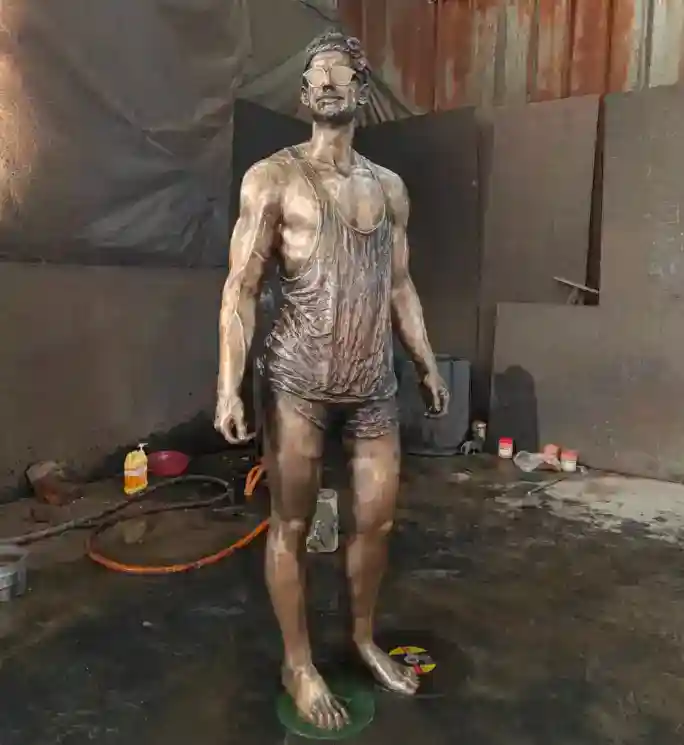 Bronze Human Statue
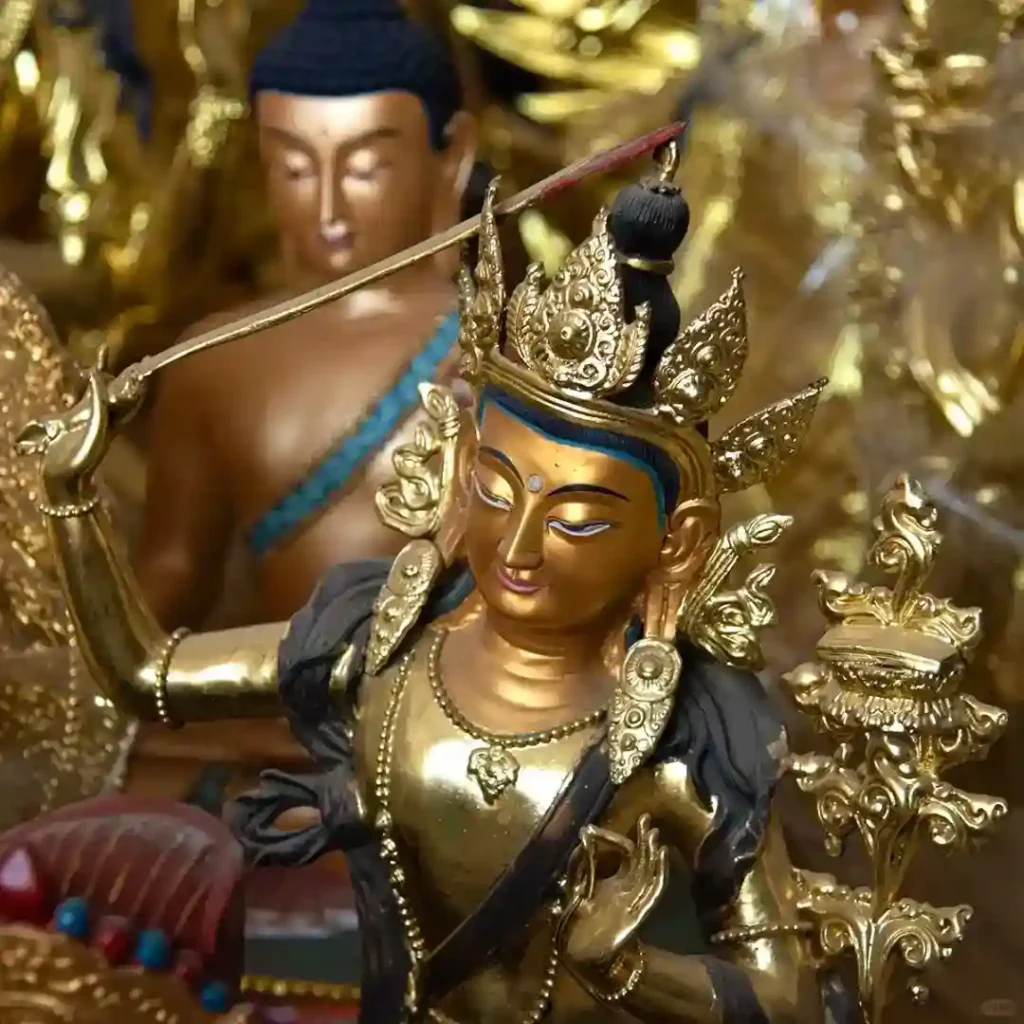 Bronze Buddhism Sculpture
Q9: Tell us something about the internal armature of a bronze sculpture
The internal armature of a bronze sculpture, in simple terms, is the metal support skeleton hidden beneath the sculpture’s outer shell. It functions much like the human skeletal system, bearing the entire weight and stress of the sculpture, ensuring that the work remains stable and undistorted under various external forces.
Due to the high density of bronze, a hollow bronze sculpture several meters tall, even with a wall thickness of only a few millimeters, has considerable self-weight. The bronze shell alone cannot withstand such immense weight, especially in cantilevered parts such as an outstretched arm or flowing drapery. Without the support of an internal armature, these parts would gradually sag or even break under the force of gravity. The role of the internal armature is not just load-bearing, it also provides the sculpture with the ability to resist wind pressure and seismic forces when placed outdoors, while maintaining the form without distortion over long-term environmental changes.
The commonly used materials for armatures are primarily carbon steel and stainless steel. Carbon steel, with its high strength and moderate cost, is the choice for most sculptures, but it must undergo rigorous hot-dip galvanizing or anti-corrosion coating to prevent rust and corrosion from moisture inside the sealed sculpture. Stainless steel armatures, due to their excellent corrosion resistance, are often used for high-end sculptures or harsh environments like seaside locations, though their cost is higher. The shape of the armature is typically a custom-designed truss or frame structure tailored to the sculpture’s interior space, composed of main vertical posts, crossbeams, and diagonal braces. Several important principles must be followed in its design: a certain expansion gap must be pre-made between the armature and the bronze shell, filled with flexible material. This is because the thermal expansion coefficients of copper and steel differ; when temperatures change, the two materials can slide relative to each other, preventing the bronze shell from cracking. The armature is fixed at multiple points via connecting plates welded to the inner wall of the bronze shell, ensuring support without causing stress concentration. Throughout the casting process, the armature is installed only after the sculpture has been cast in sections. Craftsmen lift the prefabricated sectional armatures into place inside the bronze shells, welding them to pre-embedded connectors. Finally, at the installation site, the various sections of the sculpture, each with its integrated armature, are assembled into a whole and securely connected to the foundation. It can be said that the internal armature is the backbone of a large bronze sculpture. Although it remains forever hidden within the work, it determines whether this piece of art can stand firm through wind and rain.
Q10: what advantages does wemedec has for its bronze sculptures?
At WEMEDEC, we provide meticulous service that spans from undertaking sculpture design to production, delivery, and on-site welding, assembly, and installation. Our bronze sculptures are primarily crafted from brass and silicon bronze, with sizes ranging from small decorative pieces to large-scale sculptures over ten meters tall. They are widely used in hotels, restaurants, parks, real estate projects, municipal engineering projects, consumer goods, and more.